VIBRANT-I
Impetus enabled a 50-woman rapamycin trial for ovarian aging and funded molecular profiling. VIBRANT-II targets 1,000 women.
Impetus Grants has deployed $34 million to support 146 research projects since 2021. We’re dedicating our next round of grants to generating the open-source data AI needs to understand aging and disease and develop new treatments faster.
Every model needs ground truth data to learn and to test their predictions. For curing disease, the relevant data is not DNA sequences or protein shapes, but molecular changes linked to organ function, disease and treatment outcomes. Collecting these observations takes years, so we need to start now. Our grants will both launch new data collection efforts, and find relevant samples to make AI-ready by adding rich molecular measurements.
We’re raising $15M to fund about 50 projects that generate open source datasets that AI needs to understand aging and develop treatments. The round starts as soon as we're funded.
$9.1M committed, round launches at $15M
Current Patrons
 Robert Rosenkranz
 Matt Bell
 Betty Wold Johnson Foundation
 Anonymous
AI impact on a domain depends on three factors: compute, training data and feedback via verification. The data we generate determines where and when AI accelerates progress, and must be relevant to the questions we want to ask.
AlphaFold learned to predict protein shapes from decades of experimentally measured structures. But predicting shapes doesn't extend to solving disease. Six years after its breakthrough, we still lack a comparable ability to explain and predict how disease unfolds in a whole body. DNA sequences and protein structures don't have blood pressure, heartbeats, or cognitive function. Asking AI how disease happens requires datasets that link molecular changes to organ function, disease progression and treatment outcomes over time. AI needs those observations both to learn and to test its predictions. This type of data involves living organisms and time passing, before we can even consider simulations.
Clinical trials and longitudinal studies have already collected biological samples paired with health outcomes, but often linked to just a couple of clinical readouts. Adding broad profiles of proteins, lipids and metabolites gives AI a depth of biological data to examine interacting processes and find signals that could predict physiological observations. These paired observations can help AI learn how physiological systems work and which details matter, bringing useful disease models closer with less compute. They also let us test predictions against real outcomes and uncover missing biology that could otherwise lead models astray.
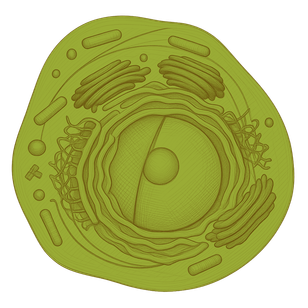
Teaches us rules of biology
Experiments take hours
Automation can scale this
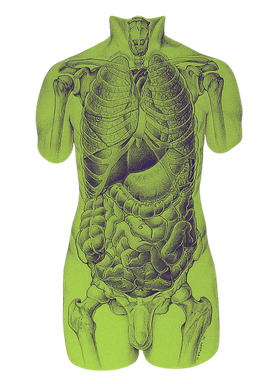
Teaches us how aging and disease happens
Experiments take months/years
Automation won’t scale this until the 2030s
We’ll fund new studies and sample collection now, starting the clock on follow-up that takes months or years and can’t be sped up. We’ll also add rich measurements to stored samples from studies with known health outcomes. That lets us turn years of past observations into AI-ready data much sooner, while new studies begin producing the data needed for continued progress. Some grants will support new methods that let researchers measure more from each sample.
We build datacenters to meet anticipated compute demand. The same logic applies to data.
Our grantmaking infrastructure and reviewers in biology and AI are in place. Once commitments reach $15M, we can open applications, review over 1,000 proposals and make awards within 2–3 months.
All funded datasets will be open source, documented and machine-readable so researchers can train and test AI models. The combined output of this round can be cross-referenced by models to verify biological hypotheses.
Impetus enabled a 50-woman rapamycin trial for ovarian aging and funded molecular profiling. VIBRANT-II targets 1,000 women.

Preserved macaque tissue, blood samples and lifetime health records let researchers study decades of aging now. Impetus funded the bank’s expansion and molecular profiling.
Impetus added protein and lipid profiling, plus markers of inflammation and senescence, to an NIH-funded everolimus trial. Paired samples link these measurements to physiological responses.
Impetus supported a method that measures immune-cell identity, membrane properties and mitochondrial state from human blood. Linking these readouts to disease and molecular profiles yields richer data from each sample.

TIME-seq makes repeated DNA methylation measurements cheaper by barcoding and sequencing samples together. Impetus funded a longitudinal mouse experiment tracking treatment responses. The published method was also validated in blood from 1,056 people.
Existing brain scans from 209 adults let researchers test how receptor binding and brain structure predict age. Impetus funded the analysis.
Since 2021: $34M across 146 projects, supporting 250+ papers and preprints and five clinical trials.
100x
representation intop journals
~10% of papers published in Nature/Science/Cell, compared to ~0.1% across all papers in that period.
Double-blind reviews focus on idea over esteem. Individual reviewers can champion projects without needing committee consensus.
~60% of assessed papers had no NIA support identified.
AI needs data linking molecular changes to organ function, disease progression and treatment outcomes. Much of that data takes months or years to collect, so we can’t wait until models need it and then catch up.
This round funds new studies that start those observations now, along with molecular measurements of stored samples from studies whose health outcomes are already known. That makes years of past observations useful sooner, while new studies build a growing supply of data.
We plan to open applications once total commitments reach $15M. We have $9.1M committed, with $5.9M still to raise.
After reaching the target, we can review proposals and make awards within 2–3 months.
To help launch this round sooner, contact Martin Borch Jensen at martin@norn.group. For donations under $5,000, you can donate by card.
Your support helps us fund ambitious science and get it started quickly. Our historical organizational overhead is 1.1%. Recipient institutional overhead is capped at 10%.
Please email impetus@norn.group.
EIN: 87-1540960
2261 Market Street STE 22725
San Francisco, CA 94114
Molecular and cellular data are essential, but the same cell state can produce different outcomes depending on the surrounding tissue and timing. Models need measurements linking those states to organ function, disease progression and treatment response. These paired observations provide training data and real outcomes to test predictions against.
Robots can run experiments in parallel, but cannot make organs age faster. Building and deploying them takes time. Even an automated lab needs years of follow-up to observe disease and treatment outcomes. Starting a three-year study today gives us three-year data three years from now.
Simulations may eventually replace many experiments, but data helps us build them and test their predictions. Models can miss biology we haven’t measured or discovered, and simulating organs over years takes far more compute than simulating cells for minutes. Physiological data helps models learn which details matter, making useful simulations possible sooner and with less compute.
The data will still help researchers study aging and test treatments. Starting slow observations now preserves the option to use stronger models later, while earlier measurements and stored samples can yield useful results sooner.
This round funds projects that create or unlock datasets AI will need to reason about aging and disease. Both new data and more data from existing material count.
New data, for example:
More data from existing material, for example:
We look for projects where:
Yes. We fund additional measurements of stored samples, as well as harmonization or re-measurement that makes existing data usable for training models.
Analysis with new models is in scope only if it produces a new, reusable dataset.
We fund projects at any stage, from new ideas to extensions of existing work. The project must produce data that helps AI reason about aging and disease. We are particularly interested in projects that start generating longitudinal data soon.
Established methods: If you are applying well-validated measurement approaches to generate a new or more useful dataset, you don’t need preliminary data. Focus on why the dataset matters and how you will structure it.
New methods or hypotheses: If you propose a new measurement approach or explanation of aging, make the case that it is plausible. Preliminary data is one way to do this, but not the only way. You can also cite supporting literature, pilot results or a strong mechanistic rationale.
We would rather fund the project you are most excited about that could change the field if it works, even if it might fail. We prefer this to work that is certain to produce results but unlikely to move the field forward.
Researchers work within a publishing system that rewards positive results, which can make ambitious projects feel risky. To help funded projects share all their findings, we have previously worked with GeroScience to enable short reports from Impetus-funded projects with null results.
Our grants range from $10K to $500K. Reviewers consider the amount you request: if two projects are otherwise equal, they will favor the one that needs less funding. On top of your requested amount, we pay institutional overhead of up to 10%.
Yes. People are the most essential part of any research project, and usually the most expensive. Feel free to use grant funds for salaries.
Using a large fraction of the grant for equipment purchases is not in scope. Plans that depend on tools that have yet to be invented are out of scope.
Academic and nonprofit researchers around the world can apply, at any career stage, including trainees and students. Unaffiliated researchers are also eligible. All applicants must have access to the facilities and resources needed for the proposed work.
You don’t need to work in aging biology already. We welcome applicants from other fields whose projects will produce data relevant to aging, disease or treatment outcomes.
No, we do not fund for-profit efforts.
We review applications in three stages so we can handle a large volume of proposals.
You can access the Stage 1 application [application link].
For Round 4, we aim to give every applicant a final funding decision within five weeks of receiving their application.
The three-week figure elsewhere on this page describes Impetus’s historical decision timeline.
We don’t set a fixed project period. Propose whatever timeline your project realistically needs, and explain it in your application if necessary. We favor proposals that deliver results sooner.
Yes, you can submit multiple proposals. Each applicant can receive up to $500K in total across Round 4 awards, including awards as a co-applicant.
Yes, you can include co-applicants. If we fund your project, we pay the grant to the lead applicant’s institution, which can subgrant part of it to a co-applicant’s institution.
Yes. All our staff and reviewers sign a non-disclosure agreement, which you can read [NDA link].
Please disclose both active and pending grants in the “other funding” section.
Yes, for a short period. We understand that you may want to publish your findings first. Because this round aims to get data into the hands of AI researchers quickly, release your dataset publicly no later than when you post your preprint, and in any case within six months of the end of the grant period.
If your data involves human participants, you can use controlled-access repositories where privacy rules require them. We can agree a longer timeline if repository review requires it, but favor earlier releases. Describe your data release plan in your application. We will not fund proposals that leave doubts about data sharing.
Do your best work!
When you accept a grant, you and your institution also agree to the following:
Use of funds: Use the funds only for the project, broadly as described in your proposal. The grant runs from the start date to the end date set out in your proposal.
Record-keeping: Keep adequate records showing that you used the funds for the project as proposed. We may inspect these records.
Progress reports: We pay the grant in several installments. Before each payment, submit a short progress report covering the previous period. If a report is late or unsatisfactory, we may delay or withhold the next payment.
Compliance: Follow all applicable laws and regulations, including IBC and IACUC requirements.
Preprints: Post your work as a public preprint (for example, on bioRxiv) as soon as it’s ready, and no later than when you submit it to a journal. We want your findings to reach the field without delay.
Detailed protocols: Include protocols in every publication that go well beyond a standard methods section. At a minimum, include:
We may treat failure to provide these as a breach of the grant agreement.
Acknowledgment: Include the following statement in all outputs, including preprints, papers, talks and posters: “The project was supported by a Longevity Impetus Grant from Norn Group.”
The agreement you will sign if you receive a grant describes these requirements in greater detail.
You and your institution do, subject to your institution’s own policies. Norn Group makes no claim on intellectual property of any kind.
No. We use the same agreement and overhead rate for every grantee. We cannot change the wording of the agreement or pay more than 10% overhead.